We import abalone and other seafood sourced directly from fishing cooperatives on the Pacific coast—hand-harvested, traceable, and processed at certified facilities for the U.S. market.
We import abalone and other wild-harvested seafood from Baja California, working directly with fishing cooperatives on the Pacific coast of Baja California and Baja California Sur—hand-harvested by local divers, traceable, and processed at certified facilities for the U.S. market.
The company is built on long-standing ties to the region. Co-founder Pancho Morales grew up in the Baja fishery and maintains direct relationships with the cooperatives. Our work builds on those connections, linking established fisheries to the U.S. market with a focus on traceability and consistency.
We begin with frozen product to ensure control through the supply chain, with plans to expand into chilled product as distribution develops. Over time, we expect to include other regional species such as wild fish and local canned seafood.
Hover or click a topic for more info.
Introduction
We import abalone and other wild-harvested seafood from Baja California, working directly with fishing cooperatives on the Pacific coast of Baja California and Baja California Sur—hand-harvested by local divers, traceable, and processed at certified facilities for the U.S. market.
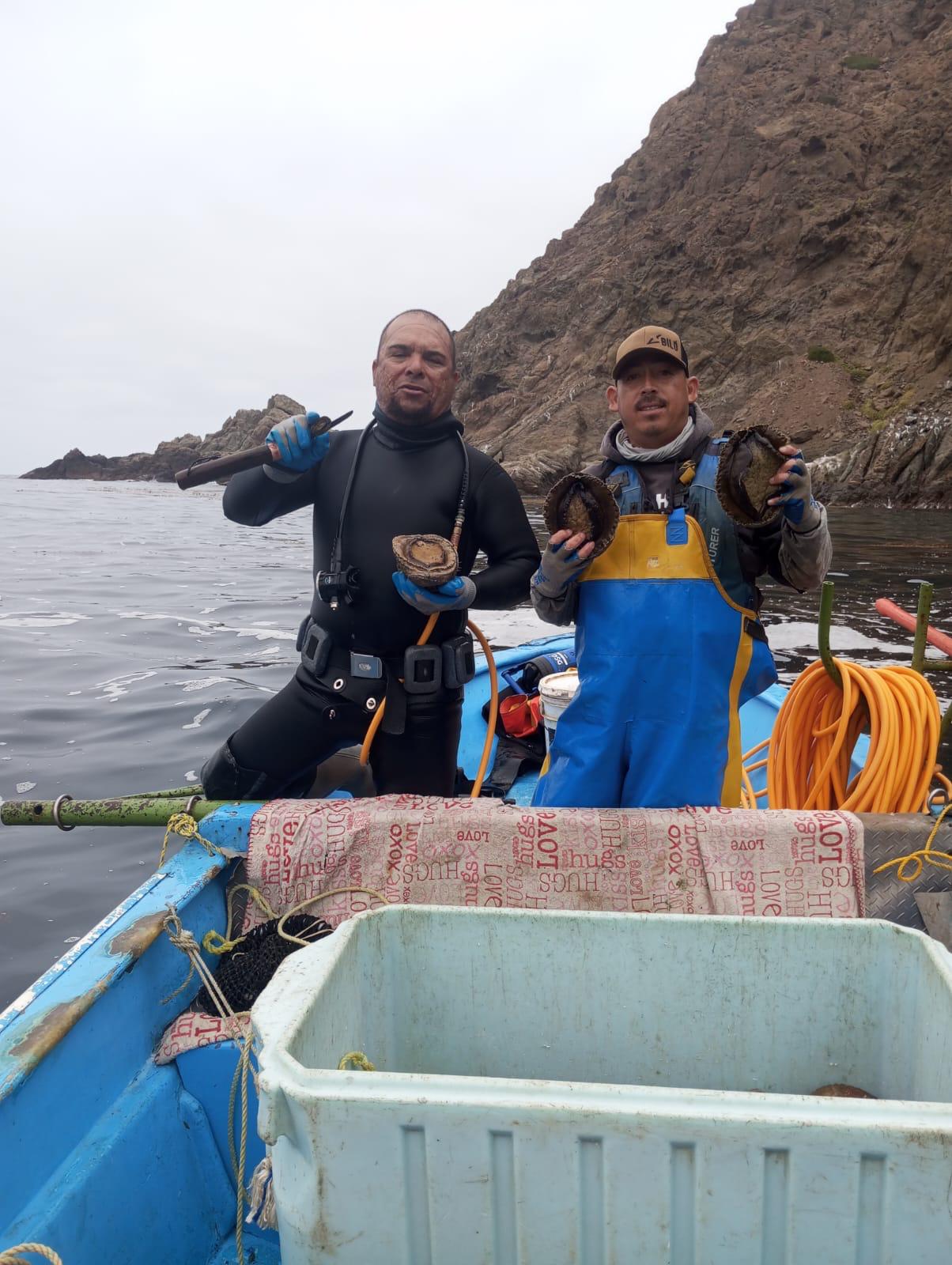
Importer of wild-harvested seafood from Baja California. We source wild abalone from the Pacific coast of Baja California, working directly with fishing cooperatives in Baja California and Baja California Sur. Harvesting is done by hand by local divers, and product is processed at certified facilities before export to the U.S.
The company is built on long-standing ties to the region. Co-founder Pancho Morales grew up in the Baja fishery and maintains direct relationships with the cooperatives. Our work builds on those connections, linking established fisheries to the U.S. market with a focus on traceability and consistency.
We begin with frozen product to ensure control through the supply chain, with plans to expand into chilled product as distribution develops. Over time, we expect to include other regional species such as wild fish and local canned seafood.
Hover or click a topic for more info.
Pancho & Paco
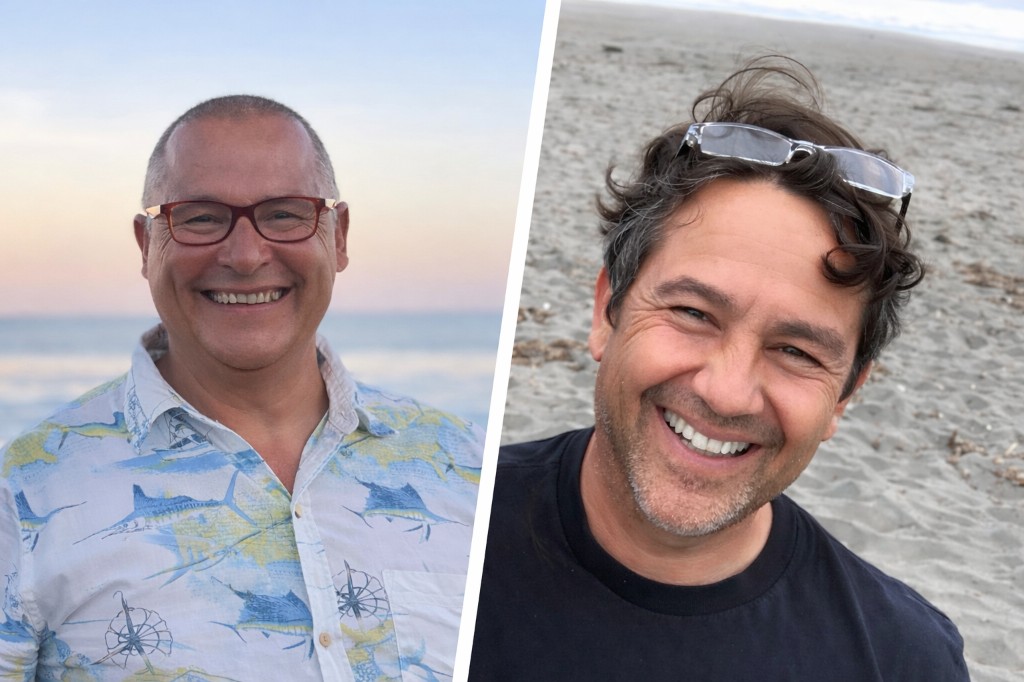
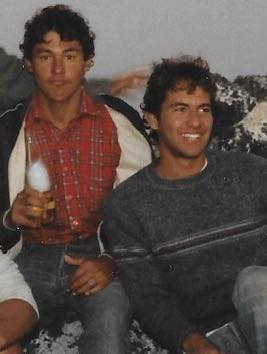
Pancho and Paco, Bahía Asunción, 2026
Francisco “Pancho” Morales and Gregor “Paco” Flores met in 1984, the summer after graduating high school, while surfing at Punta Abreojos on the Pacific coast of Baja California. Paco had come down from Mendocino, California. Pancho was from Ensenada, Mexico. After a few surfs together, and over shared machaca tacos, they became fast friends.
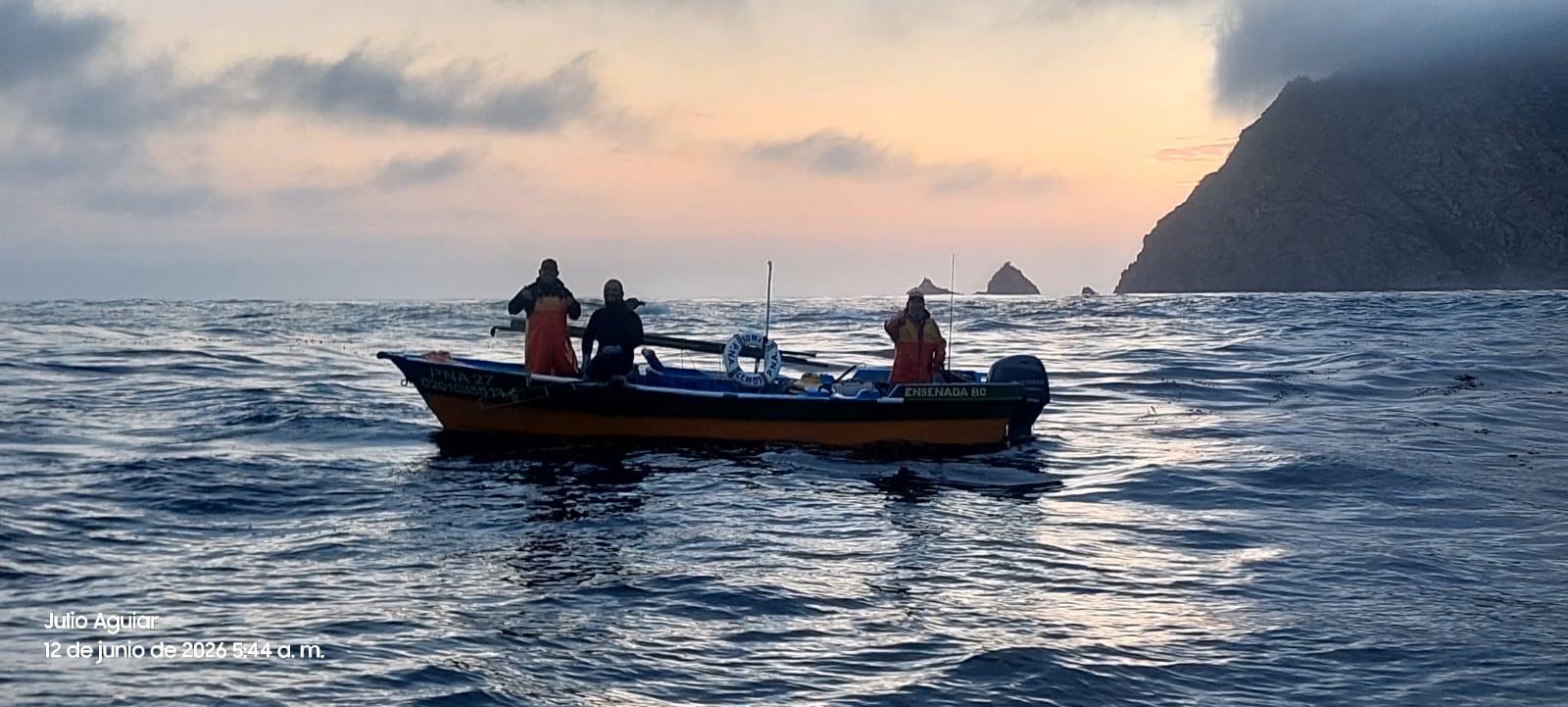
They stayed in touch for years, then lost contact as life moved on. Pancho built his life in the Baja fisheries—diving as a teenager and later working as a commercial diver, fisherman, captain, and cooperative member. His family has long been part of the abalone fishery within a cooperative system that manages harvest under strict quotas and local control.
Paco followed a different path, spending years surfing in Hawaii before becoming a mechanical engineer in California. He later spent a decade at Apple working on complex product systems before starting this business, but remained closely tied to the ocean throughout. In 2003, Paco returned to Baja and tracked Pancho down in Ensenada. They reconnected after nearly ten years; much of their time together is now with family visits to Pancho’s hometown of Bahía Asunción, where their children have become close friends in the same way.
Pancho and Paco — Isla Todos Santos, 1984
For several years, Pancho had been pointing to the need for new markets as conditions in the fishery shifted. More recently, that led to a direct question: why hadn’t seafood from these cooperatives—carefully handled and harvested within a controlled system—reached the California market that would value it? P&P Wild Baja Seafood was built as a direct answer, working with cooperative fisheries and bringing product across the border with minimal handling and full traceability—from specific boats, divers, and towns.
Products
Cedros Gold™
Green Abalone (Haliotis fulgens)
Cedros Gold is our designation for premium wild green abalone sourced from the Pacific waters surrounding Isla Cedros, Baja California.
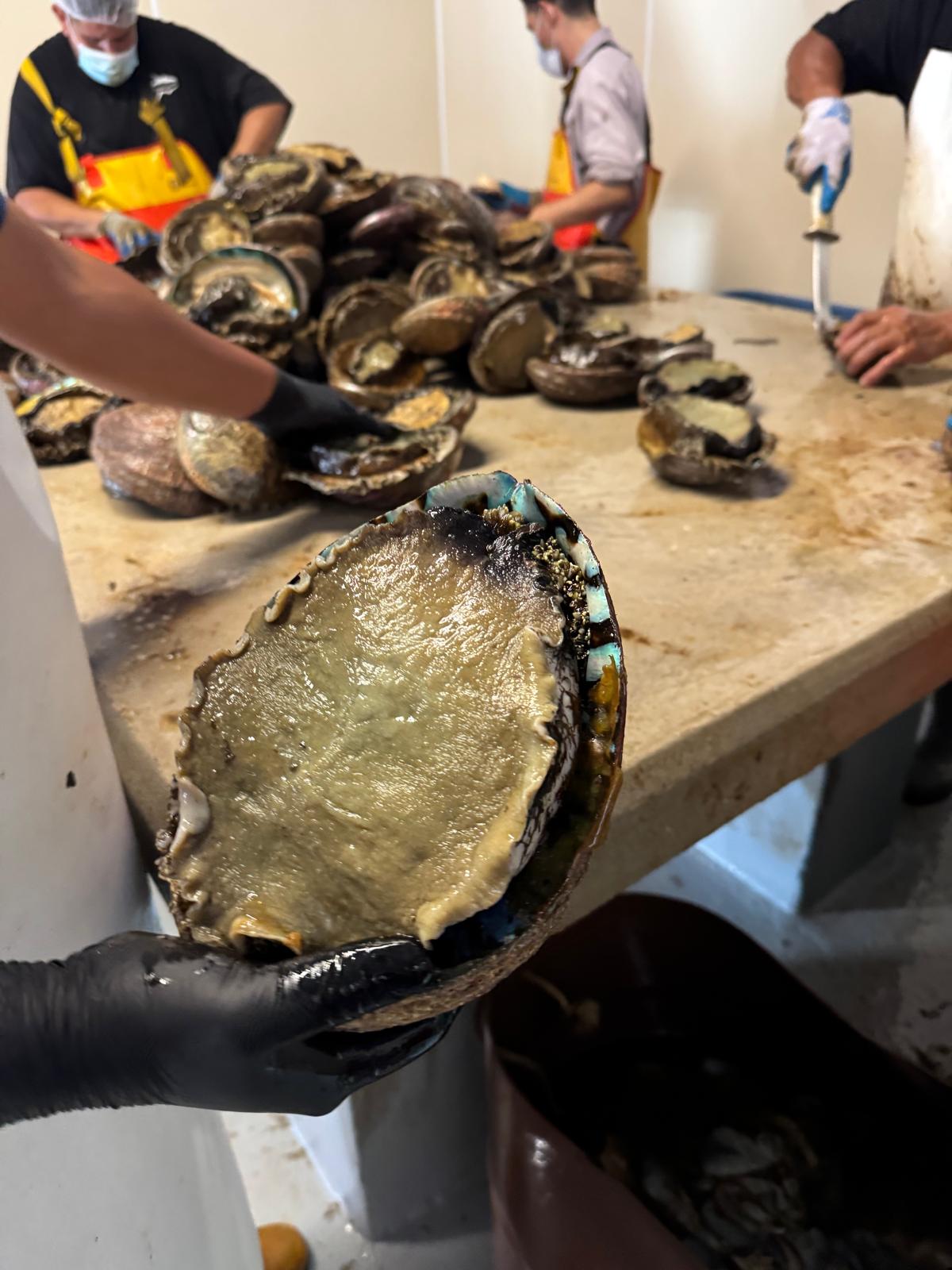
Harvested by cooperativo divers and processed at certified facilities shortly after landing, Cedros Gold abalone is selected for larger size, condition, and consistency. The cold, nutrient-rich waters of this region produce abalone with firm texture and a clean, balanced flavor profile suited for a range of culinary applications.
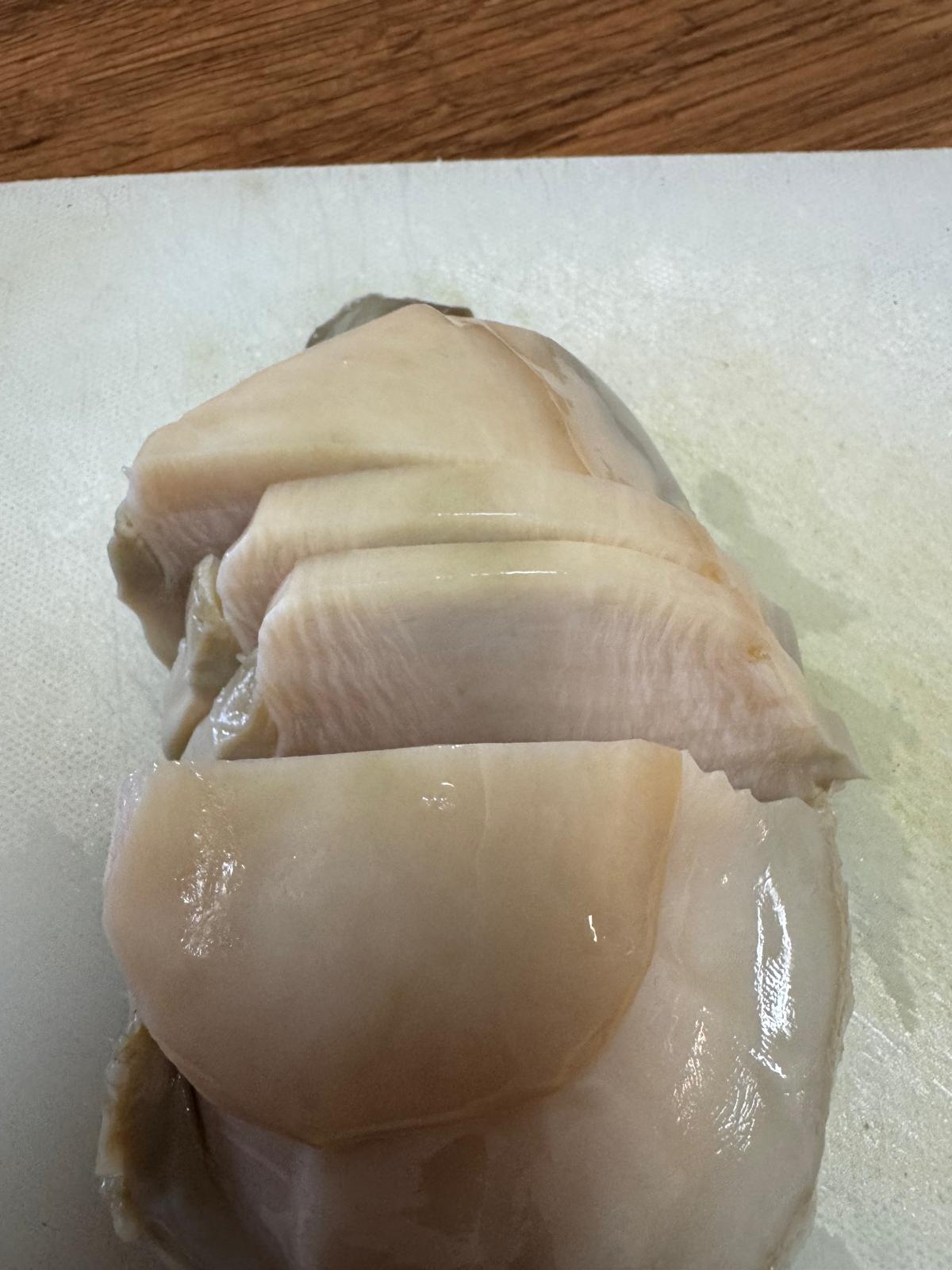
We currently offer Cedros Gold in frozen form, vacuum packed to preserve quality during transport and storage.
Cedros Rosa is our designation for wild pink abalone from the Pacific waters surrounding Isla Cedros, Baja California—drawn from the same island cooperative harvest and certified processing network as Cedros Gold.
Pink abalone is known for its delicate, refined flavor and tender texture: a lighter, more subtle profile than green abalone, well suited to preparations where the shellfish itself is the focus.
Harvested by cooperative divers and processed at certified facilities shortly after landing, Cedros Rosa is offered frozen and vacuum packed to preserve quality during transport and storage.
San Roque Select represents wild abalone sourced from other Baja California fisheries outside of Isla Cedros. This product offers a broader range of sizes while maintaining the same diver-based harvest methods and regulated fishery standards.
Processed at certified facilities and vacuum packed shortly after harvest, San Roque Select provides consistent quality and flexible supply for a range of menu applications.
The abalone fishery along the Pacific coast of Baja California has been shaped over more than a century. In the early 1900s, Japanese divers working out of California helped establish the first commercial harvest from large vessels and seasonal camps along remote coastline. Families settled, and small camps grew into permanent coastal towns.
After World War II, Mexico established a cooperative system that gave local fishing communities exclusive rights to harvest specific coastal areas. Those cooperatives remain responsible for fishing and for managing the resource—limits, seasons, and community enforcement.
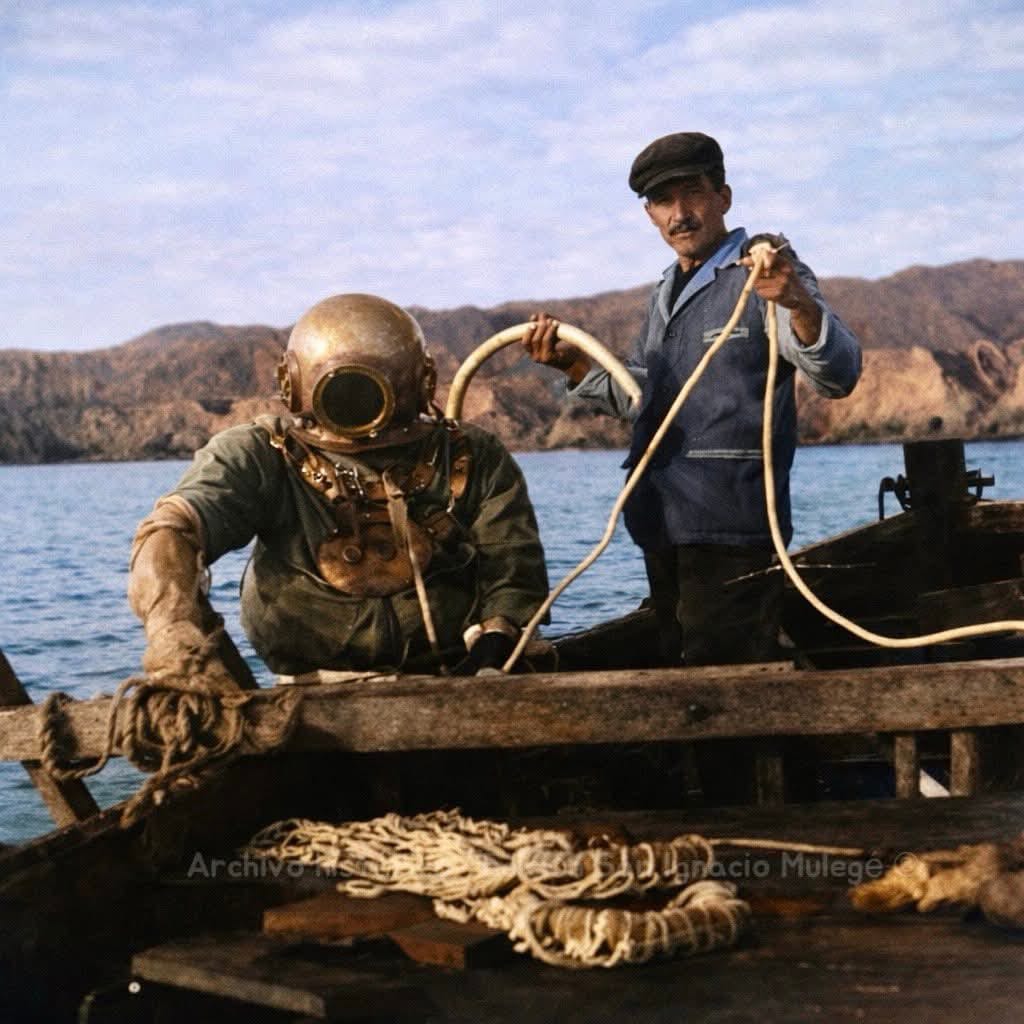
Abalone has always been one of the most demanding fisheries: Early abalone divers worked with surface-supplied air systems, using large compressors and sealed escafandra suits to reach deeper beds in cold, kelp-heavy waters. Over time, methods shifted to wetsuits, masks, and lighter equipment, allowing greater mobility—though harvesting remains unchanged, with each abalone still taken by hand. In the 1990s, withering syndrome reduced populations; cooperatives and regulators tightened controls and shifted toward a more conservative approach.
In the 1960s there was a transition from escafandra to mask and wetsuit, which greatly improved access and mobility. La Bocana, 1966.
Today, abalone from Baja California comes from a limited, closely managed fishery—quotas, restricted seasons, and harvest tied to the communities that depend on it—a balance between what can be taken and what must be left in the ocean.
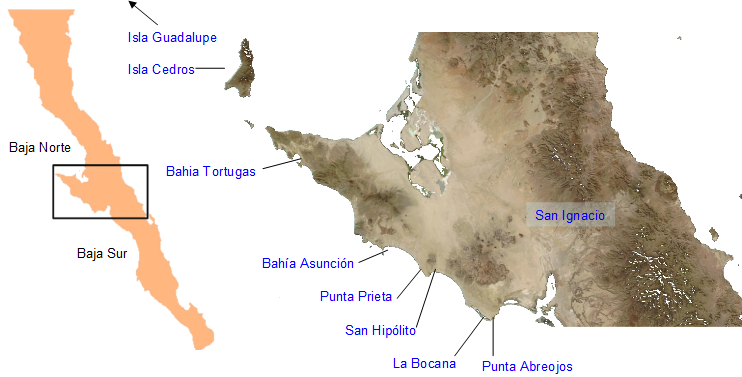
Map of the fishery
The fisheries we work with are concentrated along the Pacific coast of central Baja California and Baja California Sur. Select a town on the map for more information.
ABALONE
Red abalone shown on a reef.
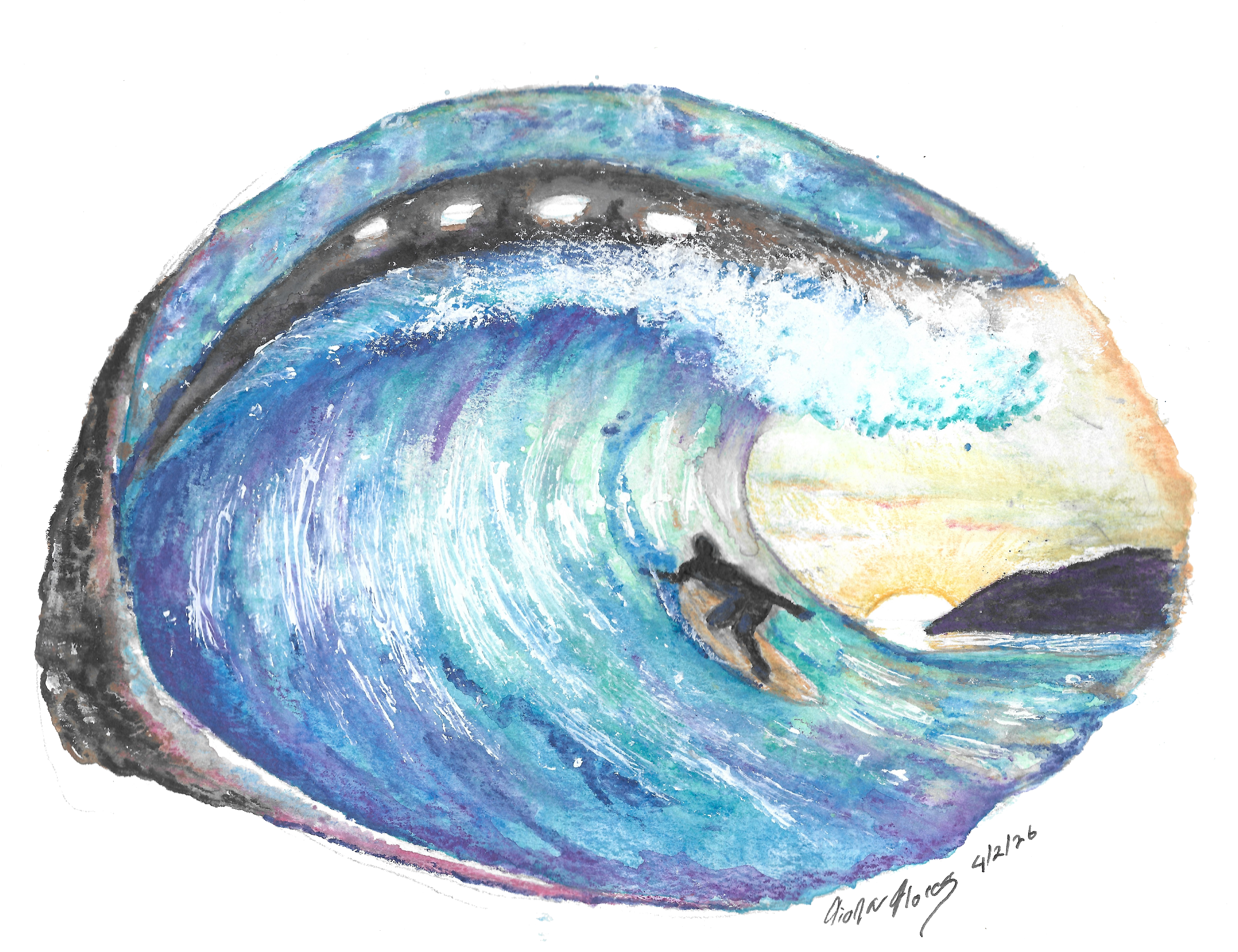
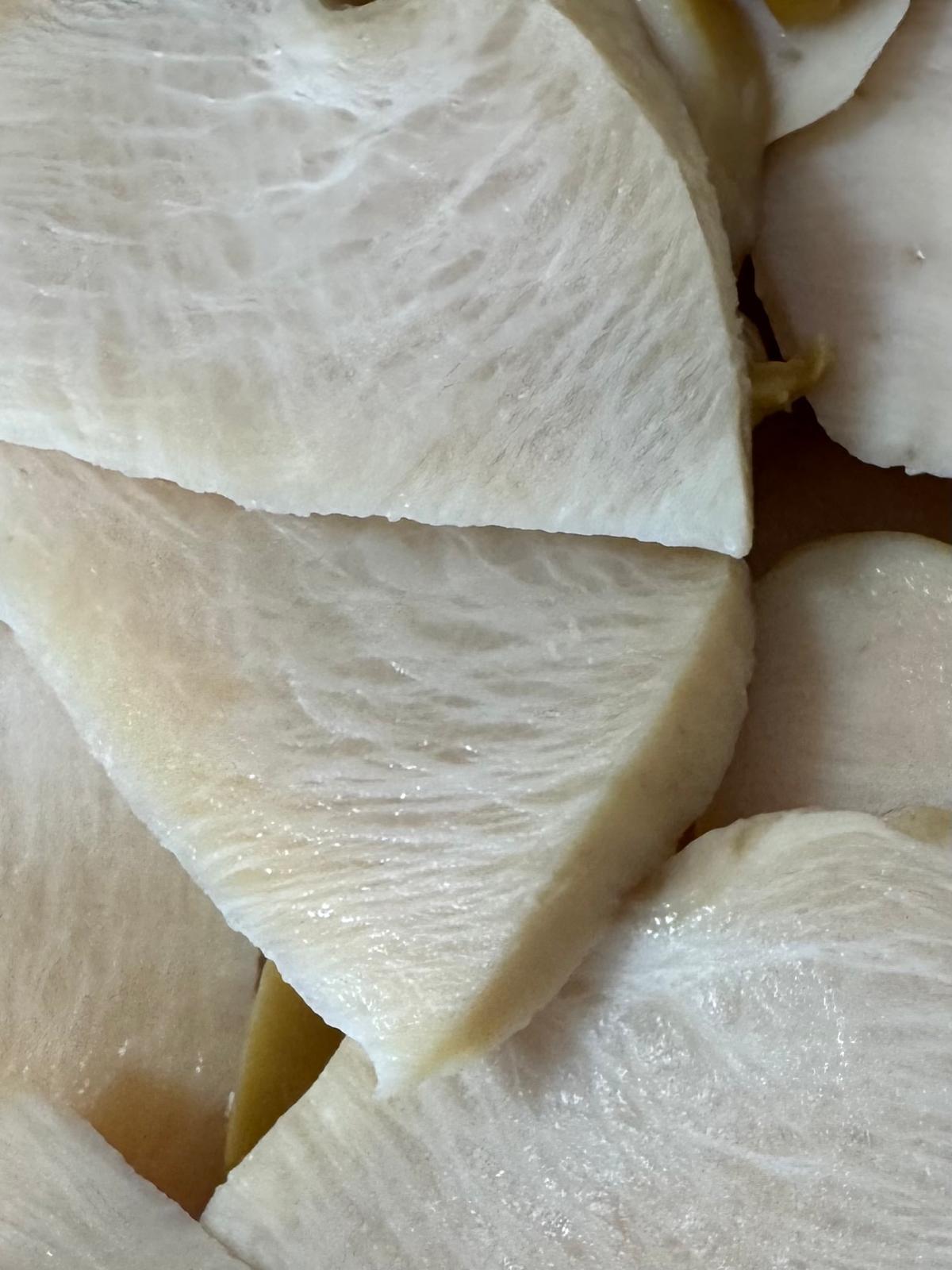
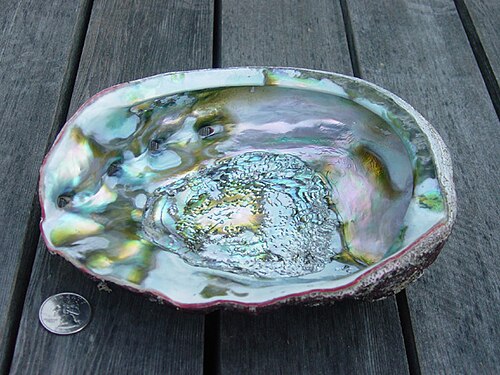
The inside of the abalone shell, with its beautiful iridescent colors.The edible portion of the abalone, the foot, is shown in the shell.
Abalone are a type of sea snail that can grow to be very large. They have a simple, bowl-like shell with a row of small holes along one edge, and the inside of the shell is known for its bright, iridescent colors. Underneath is a thick, muscular foot that they use to grip the rocky reefs where they live.
Different species are found along the Pacific coast. California is known for its large red abalone, while green and pink abalone are more common along the Baja coast. Abalone feed on kelp and thrive in cold Pacific waters. They grow slowly and can live for 20 to 40 years, with some reaching over 10 inches in shell length. While overfishing has had an impact in some areas, the primary threat today is environmental change, particularly warming ocean conditions that affect kelp growth and habitat.
Credit: Archivo histórico · Edición San Ignacio Mulegé. Cooperativa Progreso de La Bocana, start of 1966 season, La Bocana, B.C.S. (digitally colorized).
Japanese abalone drying process — Isla Cedros, early 1900s
Fishery map (Isla Cedros town detail)
Credit: Roger Chute, 1926; abalone drying racks, Isla Cedros. Cited in Crocker (1931) and SciELO historical ecology paper; related images in Estes (1977), San Diego History Center.
Japanese divers — Isla Cedros, early 1900s
Fishery map (Isla Cedros town detail)
Credit: Donald H. Estes, “Kondo Masaharu and the Best of All Fishermen,” Journal of San Diego History, Summer 1977, vol. 23 no. 3; San Diego History Center (Kondo abalone operation, ca. 1910–1930).
Punta Abreojos coastal view
Fishery map (Punta Abreojos popover)
Credit: Licensed image via Google Images. Punta Abreojos.
Red abalone on a reef
Abalone section
Credit: Stock photograph.
San Ignacio oasis and mission
Fishery map (San Ignacio popover)
Credit: Getty Images. Misíon San Ignacio Kadakaamán.